
Getting the right nursing care shouldn't mean giving up your independence. Our registered nurses come to you — whether that's your home, a group living arrangement, or somewhere in your local community across South East Queensland.
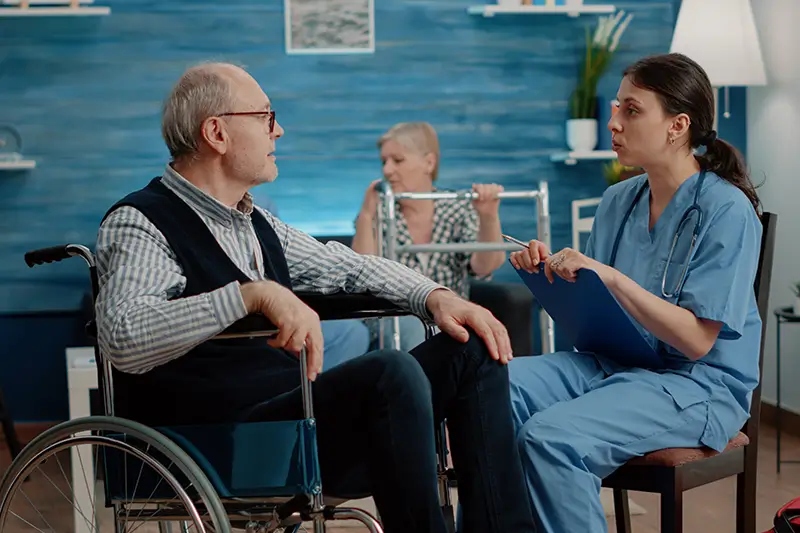
Getting the right nursing care shouldn't mean giving up your independence. Our registered nurses come to you — whether that's your home, a group living arrangement, or somewhere in your local community across South East Queensland.
We work with NDIS participants who need clinical support to stay healthy, manage ongoing conditions, and live life on their own terms. No hospital waiting rooms. No disruptions to your routine. Just qualified nurses who know what they're doing, right where you need them.
Community nursing under the NDIS gives participants access to registered and enrolled nurses outside of hospital settings. Rather than travelling to a clinic or relying on emergency departments for ongoing needs, a community nurse visits you at home or in your supported living environment.
This type of care falls under the NDIS Capacity Building budget — specifically designed to help you maintain your health and build skills that support a more independent life. Your nursing plan is developed in collaboration with your GP, allied health professionals, and your support coordinator to make sure everything works together.
It's not a one-size-fits-all approach. Some participants need a nurse once a week to check wound dressings. Others rely on daily visits for medication administration or catheter care. We match the level of support to what you actually need, and adjust it as your situation changes.
Proper wound care prevents infections and speeds up healing. Our nurses assess, clean, dress, and monitor wounds — from surgical sites and pressure injuries to chronic wounds that need long-term attention. We follow evidence-based wound care protocols and work alongside your treating doctor to adjust treatment plans when needed.
Getting medications right matters. Our nurses help with administering prescribed medications, setting up Webster packs, monitoring for side effects, and making sure dosages stay on track. For participants managing multiple medications, this kind of oversight can prevent serious complications.
Continence issues affect a lot of NDIS participants, and they're nothing to feel uncomfortable about. We carry out thorough continence assessments, recommend appropriate products, and develop management plans that give you more confidence and control day-to-day.
Living with diabetes, respiratory conditions, epilepsy, or cardiovascular disease requires ongoing monitoring. Our nurses track your vital signs, manage symptoms, educate you on self-care strategies, and flag concerns early — before they become emergencies.
When comfort and dignity matter most, our palliative care nurses provide compassionate support for participants and their families. We coordinate with palliative care teams to manage pain, symptoms, and emotional wellbeing during difficult times.
Participants who rely on PEG or nasogastric feeding need skilled nursing to manage tube care, prevent infections, and ensure nutritional needs are met. Our nurses are trained in enteral feeding management and work closely with dietitians to keep things running smoothly.
Regular catheter changes, stoma bag management, and skin care around these sites requires clinical expertise. Our nurses handle these procedures with care, keeping you comfortable while reducing the risk of infections.
Some participants have complex medical needs that go beyond standard community nursing. Our high-intensity nursing supports cover:
These services are delivered by nurses with additional training in high-intensity care. If your NDIS plan includes funding for high-intensity supports, we can step in and provide the clinical care you need without disruption.
Getting started with community nursing through us is straightforward. Here's how it typically goes:
Step 1: Get in Touch
Call us or fill in our referral form. We'll have a chat about your situation, your NDIS plan, and what kind of nursing support you're looking for. Support coordinators and family members can also make referrals on your behalf.
Step 2: Assessment and Care Planning
One of our registered nurses will meet with you — usually at your home — to carry out a clinical assessment. They'll review your health needs, talk through your goals, and develop a personalised nursing care plan. This plan aligns with your NDIS funding and is shared with your broader support team.
Step 3: Nursing Care Begins
Once the plan is in place, your assigned nurse starts delivering care on a schedule that works for you. We keep communication lines open with you, your family, and your support coordinator so everyone stays in the loop.
NDIS community nursing is available to participants whose plans include funding for nursing care under the Capacity Building budget. You might be eligible if:
Not sure if your plan covers nursing? Your support coordinator can help you work that out. We also offer obligation-free consultations to help you understand your options.
Our nursing team covers South East Queensland, with registered nurses based across six key regions:
Each location page has details on the suburbs we cover and how to get started in your area.
Registered, experienced nurses — Every nurse on our team holds current AHPRA registration and has hands-on experience working with NDIS participants. They're not fresh out of training.
Consistent care — We assign you a regular nurse wherever possible, so you're not explaining your situation to a new face every visit. Continuity of care makes a real difference.
Flexible scheduling — Morning, afternoon, evening, or weekends. We work around your life, not the other way around.
Coordination with your team — We communicate with your GP, allied health providers, and support coordinator to make sure your care is joined up. No one works in a silo.
Transparent reporting — After every visit, we document what was done and flag any changes. You and your support team always know what's happening.
Community nursing takes place in your home or community setting rather than in a hospital. The care is tailored to your everyday needs and focused on helping you manage your health independently. Hospital nursing, by contrast, is typically for acute conditions that need round-the-clock monitoring and specialised equipment.
Community nursing sits under the Capacity Building section of your NDIS plan. The specific funding amount depends on your assessed needs, which are determined during your NDIS planning meeting. If nursing isn't currently in your plan but you need it, your support coordinator can help you request a plan review.
Yes. Under the NDIS, you have choice and control over your providers. If our service is a good fit for your needs, you can select us as your community nursing provider. If your plan is Agency-managed, you'll need to use a registered provider — we hold full NDIS registration.
Visit frequency depends entirely on your clinical needs. Some participants need daily visits, others weekly. Your registered nurse will assess what's appropriate during the initial consultation, and the schedule can be adjusted as your needs change.
We offer flexible scheduling that can include after-hours and weekend visits. For participants who need around-the-clock nursing, we'll work with you to set up a care roster that covers the hours you need.
All our nurses are registered with AHPRA (the Australian Health Practitioner Regulation Agency) and hold current practising certificates. Many have additional qualifications in wound care, continence, chronic disease management, and high-intensity supports.